Massive Fire Engulfs West London Warehouse With Fireworks and Gas Cylinders
 Nov, 26 2025
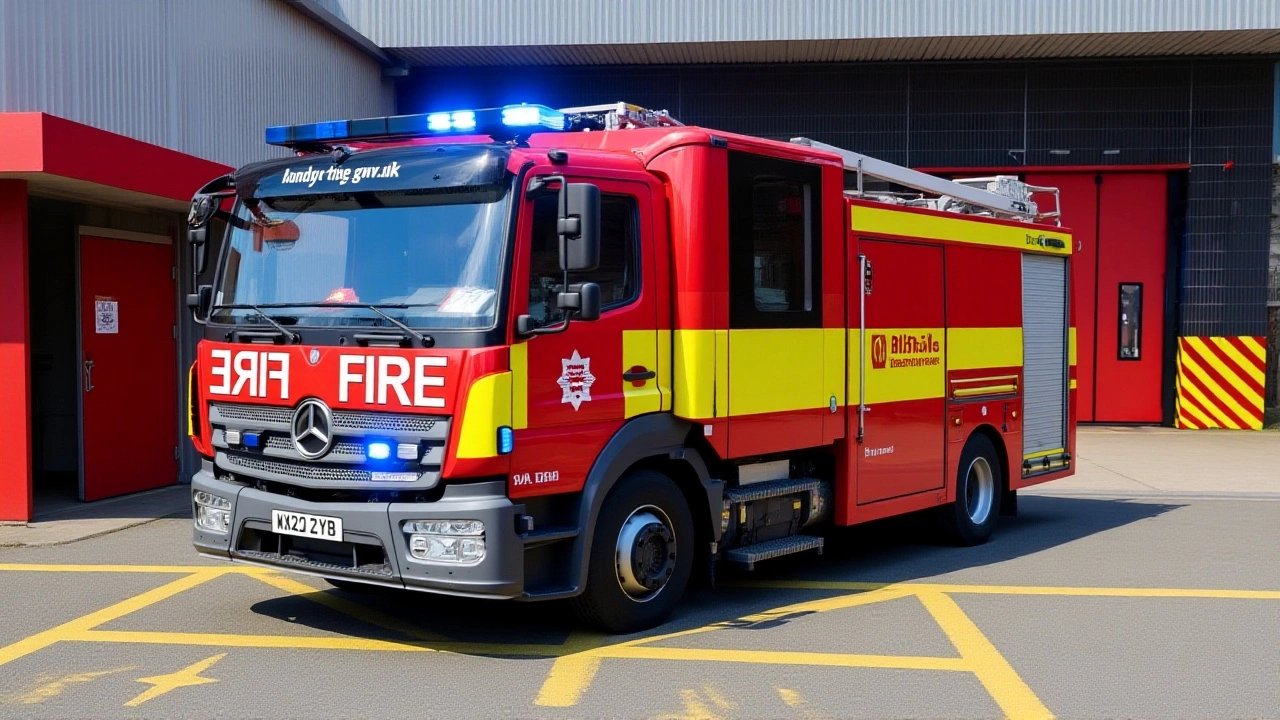
At 8:55 a.m. on November 25, 2025, a roaring fire tore through a warehouse in Southall, West London, sending plumes of black smoke across the skyline and triggering a series of violent explosions that shook the neighborhood. The blaze, which quickly consumed three-quarters of the building, was fueled by an alarming mix of fireworks and gas cylinders stored inside — a dangerous combination that turned what could have been a routine industrial fire into a full-blown emergency. Within minutes, 150 firefighters from Southall Fire Station, Heston Fire Station, and Ealing Fire Station were on the scene, battling flames that had already spread to a second warehouse. The London Fire Brigade declared a major incident by 9:02 a.m., and residents within a one-mile radius were told to keep windows shut as toxic smoke drifted through the streets. No injuries were reported, but the sheer scale of the response — 25 fire engines, aerial ladders, and hazardous materials teams — hinted at something far more dangerous than a simple electrical fault.
What Was Stored Inside?
The warehouse, operated by Southall Industrial Storage Ltd., held permits for hazardous materials issued by the Health and Safety Executive since March 2023. But permits don’t guarantee safety — and eyewitnesses described a scene straight out of a disaster movie. "We heard three loud explosions around 9:20 a.m.," said David Thompson, a 42-year-old resident of Southall. "Debris flew like shrapnel. I thought a plane had crashed." Nearby business owner Fatima Nkosi recalled the sky turning dark by 9:45 a.m. "The sun vanished. It felt like dusk at noon." The London Fire Brigade confirmed the presence of pyrotechnics and pressurized gas cylinders — a volatile cocktail. Fire investigator Dr. Samuel Adebayo of the Technical Services Unit noted, "The presence of pyrotechnic materials has created unpredictable fire behavior and secondary detonation risks." That’s why crews held back from direct attack in some zones. Instead, they focused on containment, using water cannons from a safe distance while drones mapped the fire’s spread.Evacuations and Air Quality Crisis
The immediate response included evacuating Southall Primary School — 287 students and 32 staff — and clearing Elm Court flats, home to 142 residents. Police ordered people within 500 meters to stay indoors. It wasn’t just fear driving the orders. Air quality data from the London Environmental Health Department showed PM2.5 levels hitting 185 micrograms per cubic meter by 10 a.m. — nearly eight times the World Health Organization’s safe limit. Children, the elderly, and those with asthma were at serious risk."We’ve seen wildfires in the countryside, but this? This was industrial poison in the air," said Margaret Wong, headteacher at Southall Primary. "We didn’t know if we were breathing in chemicals or just smoke. The kids were crying. We had to get them out before the smoke reached the playground." Meanwhile, the Metropolitan Police Service and Environment Agency rushed in to assess chemical runoff from firefighting foam. The warehouse sat near a drainage channel leading to the River Brent — a potential contamination pathway. By noon, hazmat teams were sampling soil and water, while the London Fire Brigade confirmed no hazardous material leaks had been detected — yet.
Who’s Responsible? The Investigation Begins
As of 4 p.m. on November 25, the cause remained unknown. No signs of arson. No reports of faulty wiring. No witness accounts of suspicious activity. The London Fire Brigade’s Arson Prevention Unit, led by Chief Fire Officer Elizabeth Torres, and the Metropolitan Police’s Major Incident Team, under Commander Daniel Fitzgerald, have launched a joint probe. Preliminary findings are due by December 2."This isn’t just about how it started," said one senior investigator off the record. "It’s about why it was allowed to happen. Who approved this storage? Were inspections done? Were the permits properly enforced?" Southall Industrial Storage Ltd., registered with Companies House since 2018 and directed by James Peterson, had been operating under a valid license — but that’s cold comfort to neighbors who lost sleep, school days, and peace of mind.
What’s Next? A System Under Scrutiny
The fire has reignited long-standing concerns about industrial storage in residential zones. Southall, a densely populated area with a rich cultural mix, has seen a steady rise in warehouse developments over the past decade — many tucked between homes and schools. The Health and Safety Executive has been criticized for relying on paper audits rather than unannounced inspections. Local councilor Leila Rahman told the BBC: "We’ve raised this for years. Fire drills, noise complaints, traffic congestion — now this. How many near-misses does it take before we act?" The Environment Agency has promised a full review of hazardous storage permits across West London. Meanwhile, the London Fire Brigade is urging warehouse operators to install automatic fire suppression systems — especially when storing pyrotechnics. "This wasn’t an accident waiting to happen," said Robert Hayes, the incident commander. "It was an accident that was scheduled."Background: Fire Risks in Urban Warehouses
This isn’t the first time fireworks and gas have collided in a London warehouse. In 2018, a fire at a similar facility in Neasden sent 120 people to hospital with respiratory distress. In 2021, a warehouse in Ilford exploded after a forklift sparked a gas leak — no one died, but the damage cost £12 million. Both incidents led to tightened guidelines — guidelines that, apparently, weren’t followed here.What’s different this time? Scale. The fire burned for over seven hours. The smoke plume reached 1,500 feet. The number of emergency vehicles deployed — 25 engines — was among the largest in London’s history for a non-terrorist incident. And the fact that it happened on a Tuesday morning, when schools were open and residents were heading to work, made the potential for tragedy even higher.
Frequently Asked Questions
How did the fire spread so quickly to a second warehouse?
The two warehouses shared a common wall and were built with minimal firebreaks — a common flaw in older industrial parks. Once the fire breached the roof of the first building, radiant heat and flying embers ignited combustible materials in the adjacent structure. Drone footage showed flames jumping across a 12-foot gap in under 12 minutes, overwhelming the fire suppression systems in both buildings.
Why were fireworks and gas cylinders stored together?
While regulations prohibit storing explosives and pressurized gases in the same zone, enforcement is inconsistent. Southall Industrial Storage Ltd. had permits for both materials but may have violated internal storage protocols. The Health and Safety Executive’s last inspection, in January 2025, found no violations — a finding now under review. Experts say the storage likely violated international safety codes, which require separate, blast-resistant units.
What are the long-term health risks for residents?
PM2.5 levels spiked to 185 µg/m³ — levels comparable to a major wildfire. While short-term exposure may cause coughing and irritation, long-term risks include aggravated asthma, reduced lung function, and increased cardiovascular strain. The London Environmental Health Department is offering free respiratory screenings to affected residents through December 15. Children and elderly residents are being prioritized.
Could this have been prevented?
Yes. Automated sprinklers, fire-resistant construction, and regular unannounced inspections could have contained or even prevented the fire. A 2023 report by the London Assembly warned that 37% of industrial sites in West London lacked adequate fire suppression systems. Only 12% of those sites were inspected in the past 18 months. This fire is a symptom of systemic neglect, not a random accident.
What’s being done to prevent future incidents?
The Greater London Authority has announced an emergency review of all hazardous material storage permits in Ealing and Hounslow boroughs. By January 2026, new rules will require mandatory fire detection systems, real-time monitoring, and quarterly inspections. The Health and Safety Executive is also considering a ban on storing pyrotechnics within 500 meters of schools or residential blocks — a policy already in place in parts of Germany and the Netherlands.
Who is James Peterson, and is he under investigation?
James Peterson is the director of Southall Industrial Storage Ltd., registered with Companies House since 2018. As of November 25, he has not been questioned by police and is not named as a suspect. However, investigators are examining his company’s compliance records, financial filings, and communication with regulators. If negligence is proven, he could face charges under the Health and Safety at Work Act 1974 — potentially including corporate manslaughter.